

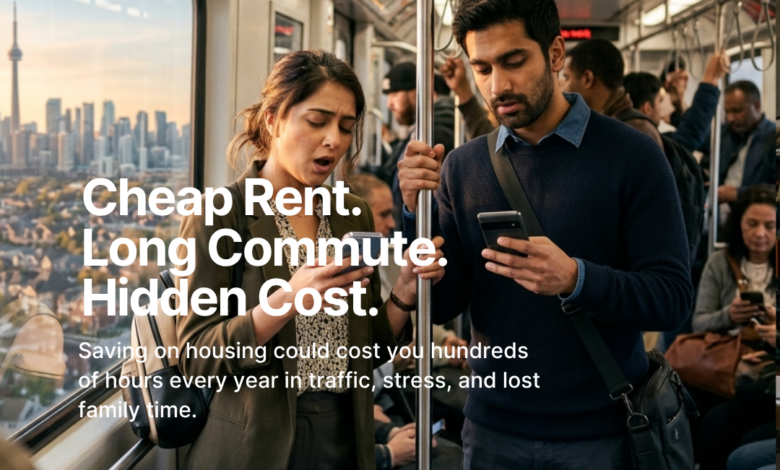
Long commutes often seem like a fair trade for lower rent or a bigger home. After all, saving a few hundred dollars each month sounds like a smart financial move.
But what many people don’t calculate is the hidden lifestyle cost.
Extra hours spent commuting don’t just affect your wallet—they influence your health, relationships, productivity, and overall quality of life. Over time, those hidden costs can outweigh the savings that looked attractive on paper.
More Than Just Fuel Costs
When people compare neighborhoods, they usually calculate:
- Rent or mortgage
- Utilities
- Parking
- Fuel
However, daily commuting comes with several invisible expenses that rarely appear in a budget spreadsheet.
These include:
- Lost personal time
- Increased stress
- Vehicle maintenance
- Public transit expenses
- Reduced family time
- Lower work-life balance
Even an extra hour each day adds up to hundreds of hours every year.
Time Is Your Most Valuable Asset
Money can be earned back.
Time cannot.
Imagine spending two hours commuting every weekday.
That’s roughly:
- 10 hours each week
- 40 hours every month
- More than 500 hours every year
Those are hours you could spend exercising, learning new skills, enjoying hobbies, or simply relaxing with family.
The longer the commute, the less flexibility your day naturally has.
Your Health Can Quietly Suffer
Long commutes are often linked with higher stress levels.
Sitting in traffic or dealing with crowded public transport every day can leave people mentally exhausted before work even begins.
Over time, longer commutes may contribute to:
- Poor sleep
- Less physical activity
- Increased stress
- Reduced energy
- Burnout
Creating extra time for yourself isn’t just convenient—it supports better overall well-being.
Family Life Changes Too
Many people accept a longer commute thinking they’ll eventually adjust.
But family routines often tell a different story.
Missing dinner regularly.
Skipping children’s activities.
Arriving home too tired to socialize.
These moments slowly become part of everyday life.
Eventually, the hidden cost isn’t measured in kilometres—it’s measured in missed experiences.
Is Cheaper Housing Really Cheaper?
A lower monthly rent doesn’t always mean lower living costs.
Consider everything together:
- Fuel or transit passes
- Vehicle depreciation
- Parking fees
- Time lost
- Additional meals purchased while commuting
- Stress-related lifestyle costs
Sometimes, living closer to work results in higher housing costs but lower overall living expenses.
That’s why looking only at rent can create a misleading picture.
A Better Way to Compare Locations
Instead of asking:
“Which home is cheaper?”
Ask:
- How much time will I spend commuting?
- Can I walk or cycle?
- Will I spend more on transportation?
- How will this affect my daily routine?
- Does the location support the lifestyle I actually want?
These questions often lead to better long-term decisions.
Think Beyond Today’s Budget
Housing decisions affect daily life for years.
Choosing a home isn’t only about finding the lowest monthly payment.
It’s also about creating a lifestyle that supports your health, relationships, career, and personal happiness.
Sometimes paying a little more to live closer to work provides far greater value than saving money while sacrificing hours every day.
Final Thoughts
A home should improve your life—not simply reduce your monthly expenses.
Before choosing your next rental or home, calculate more than dollars.
Calculate your time.
Because the true cost of living far from work is often paid in moments you’ll never get back.


