

Used EV prices are finally becoming tempting in Canada.
A Tesla Model 3 for less than expected.
A Hyundai Kona EV suddenly affordable.
A Nissan Leaf priced cheaper than some gas-powered sedans.
But unlike traditional used cars, electric vehicles come with one major question that changes everything:
How healthy is the battery?
Because in an EV, the battery is the car.
And replacing one can cost more than some people paid for their entire vehicle.
Before signing anything, here are the battery-health questions smart Canadian buyers should always ask.
First: Ask About Battery Degradation
Every EV battery loses capacity over time.
That’s normal.
The real question is:
How much range has the vehicle lost already?
A used EV that originally offered:
- 400 km range
might now realistically deliver:
- 300–340 km
depending on age, charging habits, climate, and mileage.
Ask the seller:
- What’s the current estimated range?
- Has battery health been tested recently?
- Are there battery diagnostic reports available?
For Tesla vehicles, many owners use third-party apps and service data to estimate degradation.
Ask How the Vehicle Was Charged
This matters more than many first-time EV buyers realize.
Frequent DC fast charging can increase long-term battery wear faster than slower home charging.
Ask:
- Was the vehicle mostly home charged?
- How often was fast charging used?
- Was the battery regularly kept at 100%?
Good charging habits usually mean healthier long-term battery performance.
Cold Canadian Winters Change EV Performance
Battery performance behaves differently in Canada.
Especially in:
- Alberta
- Manitoba
- Northern Ontario
- Interior BC
Cold temperatures reduce range temporarily — sometimes significantly.
That’s why buyers should ask:
- How does the EV perform in winter?
- What’s the realistic cold-weather range?
- Has the battery experienced charging issues in freezing temperatures?
Official EV ownership guidance is available through Transport Canada’s Zero-Emission Vehicle resources.
Check the Remaining Battery Warranty
This is one of the most important steps.
Many EVs still carry battery warranties like:
- 8 years
- 160,000 km
depending on the manufacturer.
Ask:
- Is the battery still under warranty?
- Has any battery module been replaced?
- Are warranty records available?
You should also verify whether warranty coverage transfers to the next owner.
Official manufacturer warranty details should always be confirmed directly through the automaker.
Look for Software and Charging Problems
EVs are computers on wheels.
Which means software matters.
Test:
- Charging speed
- Infotainment responsiveness
- Battery preconditioning
- Navigation
- Regenerative braking
- App connectivity
Slow charging, warning messages, or software glitches could hint at deeper problems.
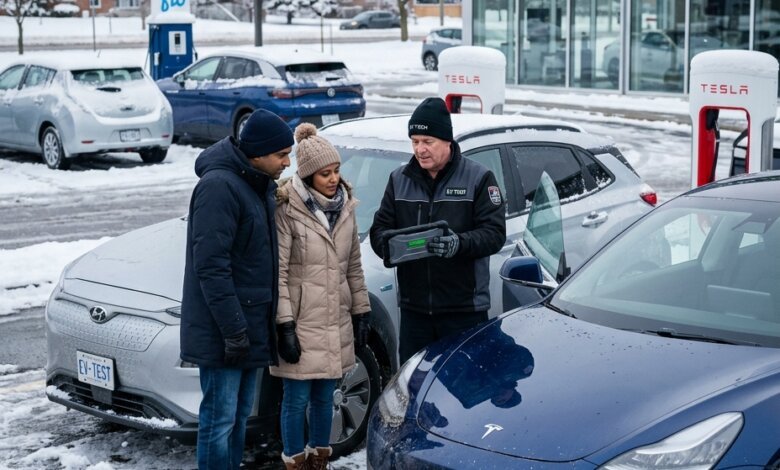
Always Ask for a Pre-Purchase EV Inspection
Not every mechanic understands EVs properly.
Find an EV-certified technician or dealer familiar with electric vehicles.
A professional inspection should evaluate:
- Battery health
- Charging system
- Cooling systems
- High-voltage components
- Tire wear
- Suspension condition
Organizations like CAA Canada also provide useful used-vehicle buying guidance for Canadian drivers.
Biggest Red Flags When Buying a Used EV
Missing battery information
If the seller avoids battery-health questions, be cautious.
Extremely low resale pricing
Sometimes cheap EVs hide battery degradation issues.
Fast charging problems
Slow or inconsistent charging can become expensive later.
Unrealistic range claims
Always compare real-world range with official estimates.
No service records
Software updates and battery servicing history matter.
So… Is Buying a Used EV Worth It?
Honestly? For many Canadians — yes.
Used EVs can offer:
- Lower maintenance
- Reduced fuel costs
- Quiet driving
- Excellent commuter value
But smart EV buyers focus less on shiny screens… and more on battery condition.
Because that’s what determines whether your “great deal” stays affordable long term.
Final Thoughts
The used EV market in Canada is growing quickly — and better deals are finally appearing.
But battery health changes everything.
Ask the right questions.
Check warranties carefully.
And never skip an EV-specific inspection.
Because the smartest EV buyers don’t just ask:
“Does it drive well?”
They ask:
“How healthy is the battery I’m about to depend on for years?”
For more EV ownership guides, recalls, Canadian auto news, and buying tips, visit:
Everyana Auto


