
BC Winter Tire Law 2026: Dates, Routes, Requirements and Fines
Know the dates, routes, tire requirements and fines before driving this winter.

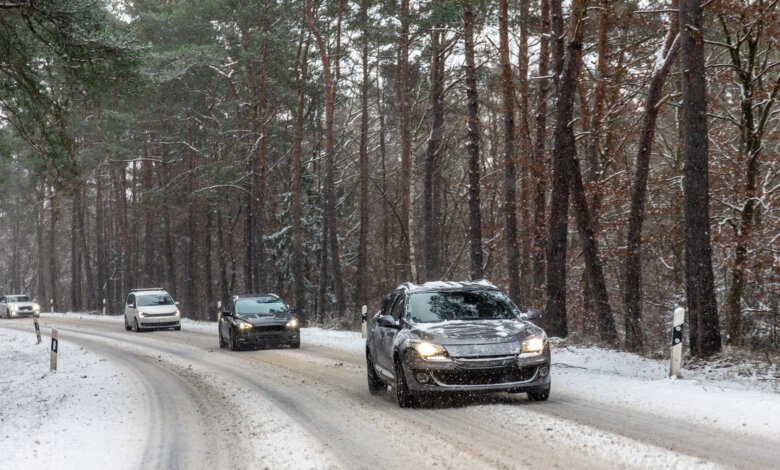
If you’re driving in British Columbia this winter, knowing the BC winter tire law 2026 requirements can help you avoid fines, travel delays and dangerous road conditions.
Winter tires or chains are required on most designated B.C. highways from October 1 to April 30. However, some routes that are not located through mountain passes or high-snowfall areas have requirements that end earlier, on March 31.
The rules can be confusing, especially for drivers who live in Metro Vancouver or southeastern Vancouver Island. Winter tires are not required on every road in B.C. Instead, the requirements apply to designated winter tire and chain routes, which are identified by regulatory signs.
This guide explains the BC winter tire law 2026, including the dates, designated routes, legal tire markings, minimum tread depth, fines and what drivers should know before travelling.
BC Winter Tire Law: Key Dates for 2026
For most designated winter tire and chain routes in British Columbia:
October 1 to April 30
During this period, drivers must follow the winter tire or chain requirements shown on roadside signs.
Some selected highways have an earlier end date:
October 1 to March 31
The exact requirement depends on the highway and the location. Drivers should always follow the regulatory signs posted along the route rather than relying only on the calendar.
Why do some routes end on March 31?
B.C. has different winter conditions across the province. Mountain passes and high-snowfall areas can continue to experience winter conditions well into April.
For that reason, the province extended winter tire and chain requirements on many highways through April 30. Other routes with generally milder conditions may end their requirements on March 31.
Where Does the BC Winter Tire Law Apply?
Winter tires are not mandatory on every road in British Columbia.
The requirements apply to designated highways and routes marked with winter tire or chain regulatory signs.
This is particularly important for drivers travelling outside the Lower Mainland and southeastern Vancouver Island. The B.C. government states that winter tires are required on most highways outside these milder coastal areas.
Common winter travel corridors include routes such as:
- Coquihalla Highway (Highway 5)
- Hope-Princeton Highway (Highway 3)
- Sea-to-Sky Highway (Highway 99)
- Fraser Canyon routes
- Okanagan Connector (Highway 97C)
- Kootenay Pass
- Rogers Pass
- Many highways in the Interior and northern B.C.
However, the list of designated routes can change, and individual sections may have different dates.
Always check the current B.C. government route maps and roadside signs before travelling.
Do You Need Winter Tires in Metro Vancouver?
If you only drive around Metro Vancouver, you may not encounter a designated winter tire route during your normal daily commute.
The Lower Mainland has a milder coastal climate, and many local roads are not designated winter tire routes. The same applies to many roads in southeastern Vancouver Island.
However, the situation changes as soon as you travel onto a designated highway.
For example, a driver living in Burnaby may not need winter tires for regular city driving but could need them when travelling through a designated mountain route.
That is why your destination and route matter as much as where you live.
BC Winter Tire Requirements: What Counts as Legal?
Under B.C. regulations, a qualifying winter tire must have a minimum tread depth of 3.5 mm.
The tire must also have one of the following markings on its sidewall:
- M+S (Mud and Snow)
- 3-peaked mountain and snowflake symbol (3PMSF)
Both markings are recognized under B.C.’s legal definition of a winter tire.
What Does the M+S Symbol Mean?
M+S stands for Mud and Snow.
An M+S tire meets B.C.’s legal winter tire requirement when it also meets the required tread-depth standard. However, an M+S marking does not mean the tire has passed the same severe-snow performance testing associated with the mountain/snowflake symbol.
What Does the 3PMSF Symbol Mean?
The 3-peaked mountain and snowflake symbol, commonly called 3PMSF, identifies a tire designed and tested for more demanding winter conditions.
The B.C. government notes that mountain/snowflake tires provide better traction in snow and ice and cold weather than M+S tires.
For drivers who regularly travel through mountain passes or areas with significant snow, a 3PMSF-rated tire can therefore be a better choice for winter conditions.
BC Winter Tire Rules: Minimum Tread Depth
The minimum legal tread depth for a winter tire under B.C. regulations is:
3.5 mm
A tire with the correct winter marking but less than the required tread depth may not meet the legal requirement.
Tread depth is also important for safety. As tire tread wears down, traction, braking and cornering performance can become less reliable. ICBC recommends keeping tires in good condition and using four matched tires.
Does AWD or 4WD Exempt You From the Winter Tire Law?
No.
Having an AWD or 4WD vehicle does not automatically remove the requirement to use appropriate winter tires on a designated route.
Four-wheel drive can help a vehicle accelerate on slippery surfaces, but it does not replace the traction provided by suitable tires.
Braking and cornering still depend heavily on the tires contacting the road.
What Is the Fine for Not Having Winter Tires in B.C.?
For passenger vehicles that are required to have winter tires on a designated route, the current fine is:
$121
Drivers can also be prevented from continuing along a designated route if their vehicle does not meet the applicable requirements.
For commercial vehicles, the penalties can be higher.
A commercial vehicle that does not carry required chains can face a $196 fine. A commercial vehicle that bypasses an active chain-up area can face a $598 fine.
BC Winter Tire Fines at a Glance
| Situation | Fine |
|---|---|
| Passenger vehicle without required winter tires | $121 |
| Commercial vehicle without required chains | $196 |
| Commercial vehicle bypassing an active chain-up area | $598 |
These fines are separate from the potential costs and risks associated with a collision.
Can You Be Turned Away Without Winter Tires?
Yes.
Police, ministry officials and other enforcement personnel can enforce winter tire and chain requirements on designated routes.
Drivers who do not comply may be turned away and fined.
This means that even if you are prepared to pay a fine, you may not be allowed to continue your trip on the designated highway.
Can Not Having Winter Tires Affect Your ICBC Claim?
Not having winter tires does not automatically make you at fault in a collision.
However, ICBC says that if you are involved in a crash where winter tires could have helped, not having them may affect whether, or how much, you are considered at fault.
This is an important distinction.
A lack of winter tires does not automatically determine fault, but tire condition and suitability can become relevant when investigating a collision.
When Should You Put Winter Tires On?
October 1 is the start of the winter tire and chain requirement period on most designated B.C. routes, but drivers should not wait for the first snowfall before preparing.
Mountain roads can experience winter conditions before snow reaches lower elevations.
If you regularly travel through the Interior, mountain passes or northern B.C., consider changing to appropriate winter tires before conditions deteriorate.
It is also important not to remove winter tires too early in spring. Some higher-elevation routes can continue to experience snow and icy conditions after the weather has warmed up in the Lower Mainland.
Are M+S Tires Good Enough for Winter Driving?
For legal purposes on designated B.C. routes, an M+S-marked tire with at least 3.5 mm of tread can meet the provincial winter tire requirement.
But legal compliance and winter performance are not exactly the same thing.
The 3PMSF mountain/snowflake symbol indicates a tire that offers better performance in severe winter conditions. B.C. officials recommend mountain/snowflake tires for drivers who regularly travel on highways in winter conditions.
If your regular driving involves snow, ice, mountain passes or prolonged cold temperatures, consider the conditions you actually drive in rather than choosing a tire based only on the minimum legal requirement.
BC Winter Tire Law 2026: What Drivers Should Check
Before starting a winter road trip, check these five things:
- Your route – Is it a designated winter tire or chain route?
- The dates – Does your route require winter equipment until March 31 or April 30?
- Your tire markings – Look for M+S or the 3PMSF mountain/snowflake symbol.
- Your tread depth – Make sure the tires have at least 3.5 mm of tread.
- Current road conditions – Check weather, highway conditions and travel advisories before leaving.
If you drive a conventional gasoline or diesel vehicle, regular tire checks and proper maintenance are especially important before winter travel.
B.C. also reserves the right to restrict travel at any time based on road conditions, so the calendar alone should not be your only consideration.
Frequently Asked Questions About BC Winter Tire Law 2026
Do I need winter tires if I only drive around Vancouver?
Generally, winter tires are not required on many local roads in the Lower Mainland. However, the requirements apply when you travel onto a designated winter tire route.
Do I need winter tires to drive from Vancouver to Whistler?
You should check the current designated-route requirements before travelling. Do not assume that living in Vancouver means winter tires are unnecessary for the entire trip. Route-specific signs and current government information determine the requirements.
Are M+S tires legal in B.C.?
Yes. B.C. regulations recognize tires marked M+S as qualifying winter tires when they meet the applicable requirements, including the minimum 3.5 mm tread depth.
Is a 3PMSF tire better than an M+S tire?
For winter performance, yes. The mountain/snowflake designation indicates stronger winter performance than a basic M+S designation. Both can satisfy B.C.’s legal winter tire definition when the applicable requirements are met.
What is the minimum tread depth for winter tires in B.C.?
The minimum tread depth is 3.5 mm.
What happens if I drive a designated route without winter tires?
You can be stopped, fined and prevented from continuing on the route. For a passenger vehicle, the current fine is $121.
Does AWD mean I don’t need winter tires?
No. AWD or 4WD does not automatically exempt a vehicle from winter tire requirements.
When does the BC winter tire season end?
Most designated routes require winter tires or chains until April 30. Selected routes have requirements that end March 31. Always check the specific route because the dates are not identical across the province.
Final Takeaway
The BC winter tire law 2026 is not a province-wide requirement for every road. Instead, winter tires or chains are required on designated routes, particularly across mountain passes, the Interior and other areas where winter driving conditions can be severe.
For most designated routes, the requirement runs from October 1 through April 30, while selected routes end on March 31.
A legal winter tire must have either an M+S or 3PMSF marking and at least 3.5 mm of tread depth. Passenger vehicles that fail to meet the requirement can face a $121 fine, while commercial vehicle chain violations can result in higher penalties.
Before travelling, check your route, inspect your tires and review current road conditions. A few minutes of preparation can help you avoid a fine and, more importantly, improve your safety on B.C.’s winter roads.
Sources: B.C. Government – Designated Winter Tire & Chain Routes · B.C. Government – Winter Tire & Chain Enforcement · B.C. Motor Vehicle Act Regulations · ICBC – Winter Tires and Tips


